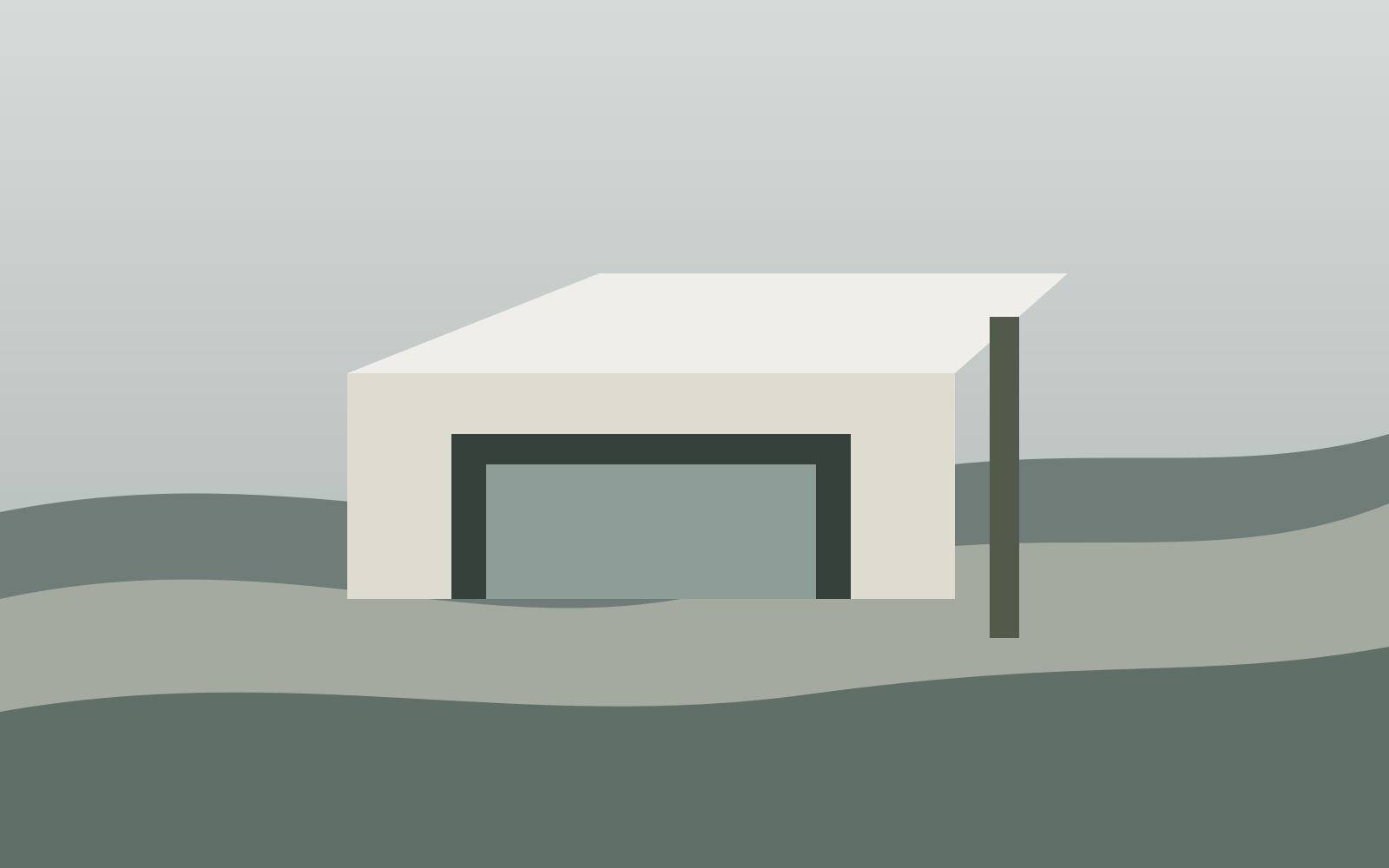
It is tempting to organize a coastal house around the widest possible opening toward the water. That can produce an immediate image, but it may weaken the experience of arrival and leave everyday rooms exposed to weather.
A more deliberate sequence can hold the horizon back. The approach first reads the building as shelter, then passes through a compressed threshold, and only afterwards releases the long view. The landscape becomes part of movement rather than a fixed backdrop.
Wind asks for another layer of decisions. Walls, courtyards and roof edges can create small zones of protection so the project remains usable when the site is at its most exposed. These moves are spatial before they are technical.
The strongest result is not a building that competes with the coast. It is one that edits the conditions of the site: when to reveal, when to protect, and where to let the weather remain fully present.